Lipid-Related Review
Patients with lipid findings on their laboratory results sometimes ask whether plasma filtration has a role alongside their existing medical care.
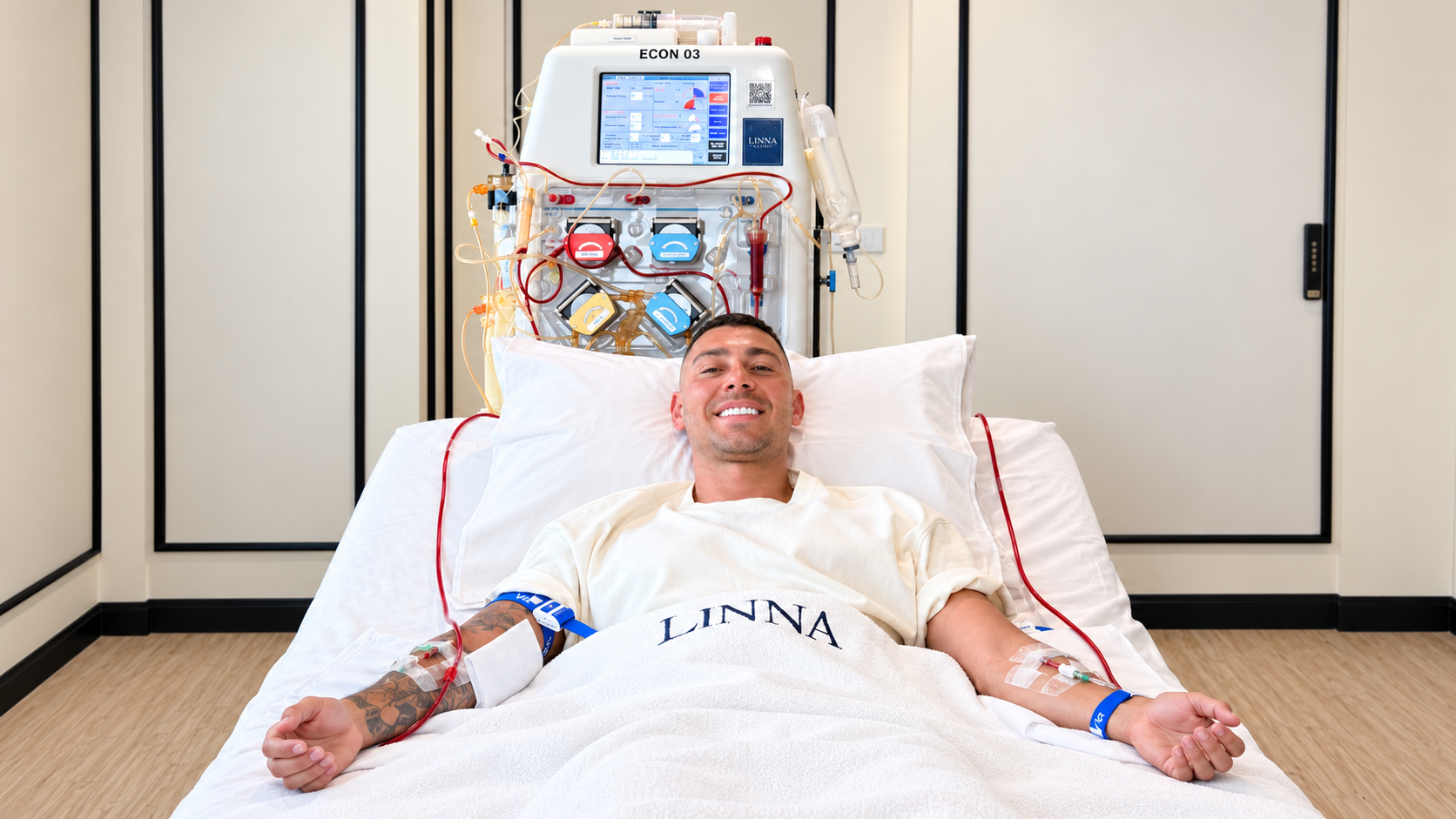
Signature Program · Bangkok
Double Filtration Plasmapheresis is a two-stage blood filtration procedure performed under medical supervision. At LINNA Longevity it is only planned after a physician has reviewed your health history, medication and laboratory results.
Program overview
DFPP stands for Double Filtration Plasmapheresis. Blood is drawn through a sterile circuit, plasma is separated from the cellular components, and the separated plasma then passes through a second, finer filtration stage before the plasma and blood components are returned to the body.
The purpose of the second filter is selective: it is chosen to reduce particular plasma components according to the clinical indication identified by the physician. It is not a general cleansing procedure, and it does not remove "all toxins".
Because DFPP involves an extracorporeal circuit and affects plasma composition, it requires a full medical assessment. The doctor decides whether the procedure is appropriate, which parameters are used, and whether any alternative is more suitable for you.
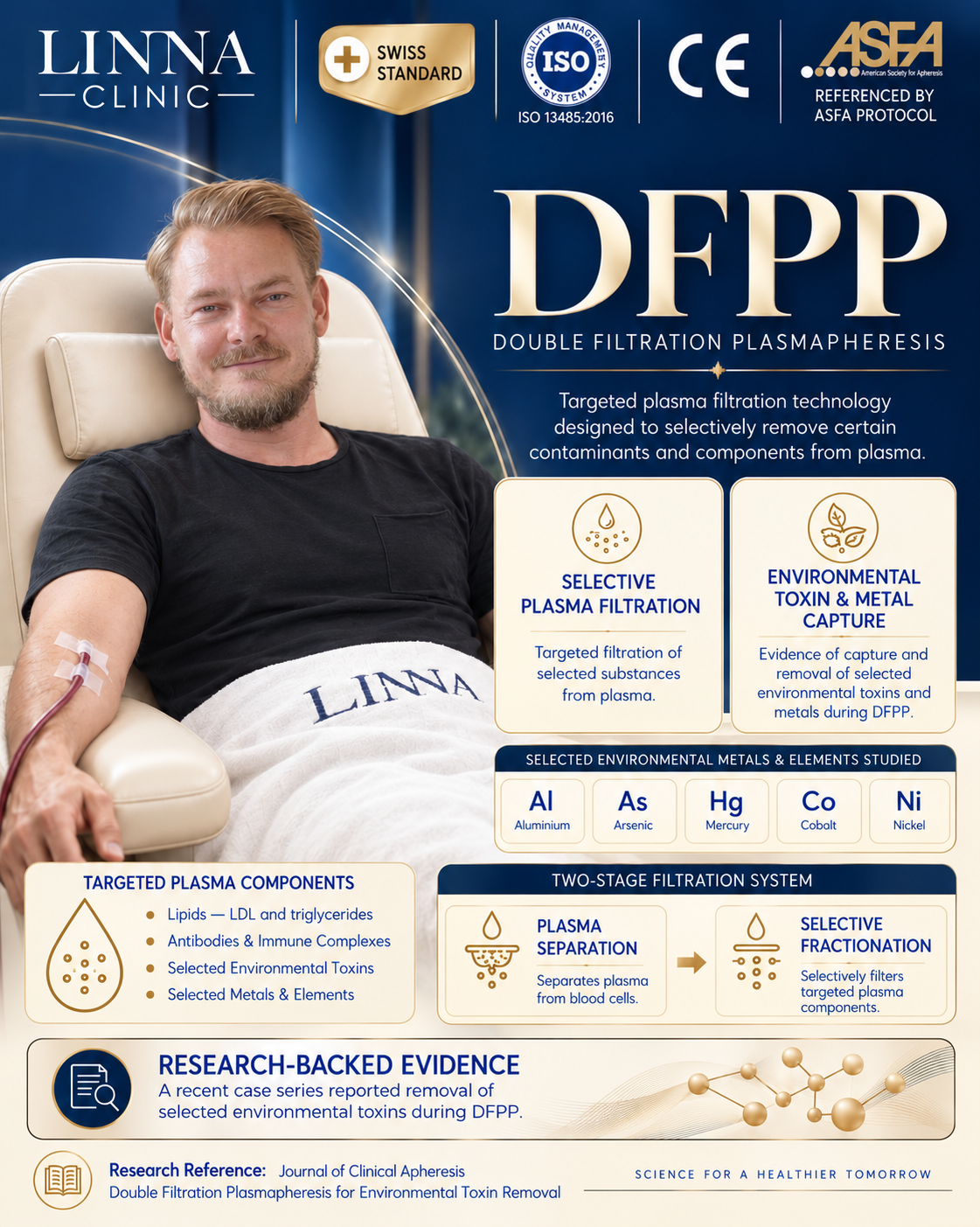
Whole blood contains cellular elements — red blood cells, white blood cells and platelets — suspended in plasma. In the first stage of DFPP, a separator divides the plasma from those cellular components, which are kept for return to the circulation.
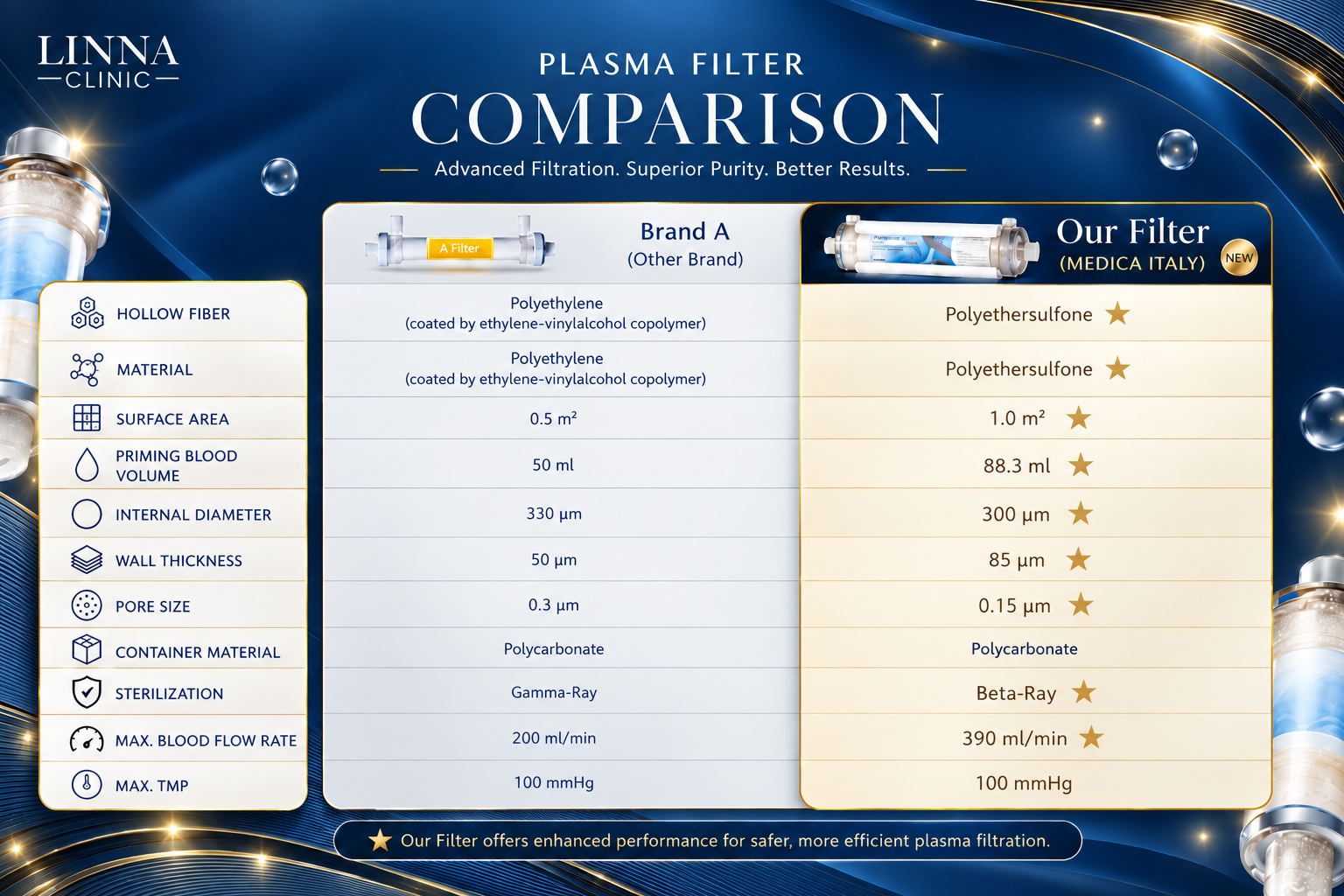
In the second stage, only the plasma passes through a fractionator with a defined pore characteristic. Depending on the filter and the parameters selected, this stage is designed to reduce particular larger plasma components while allowing smaller essential components such as albumin to pass back through.
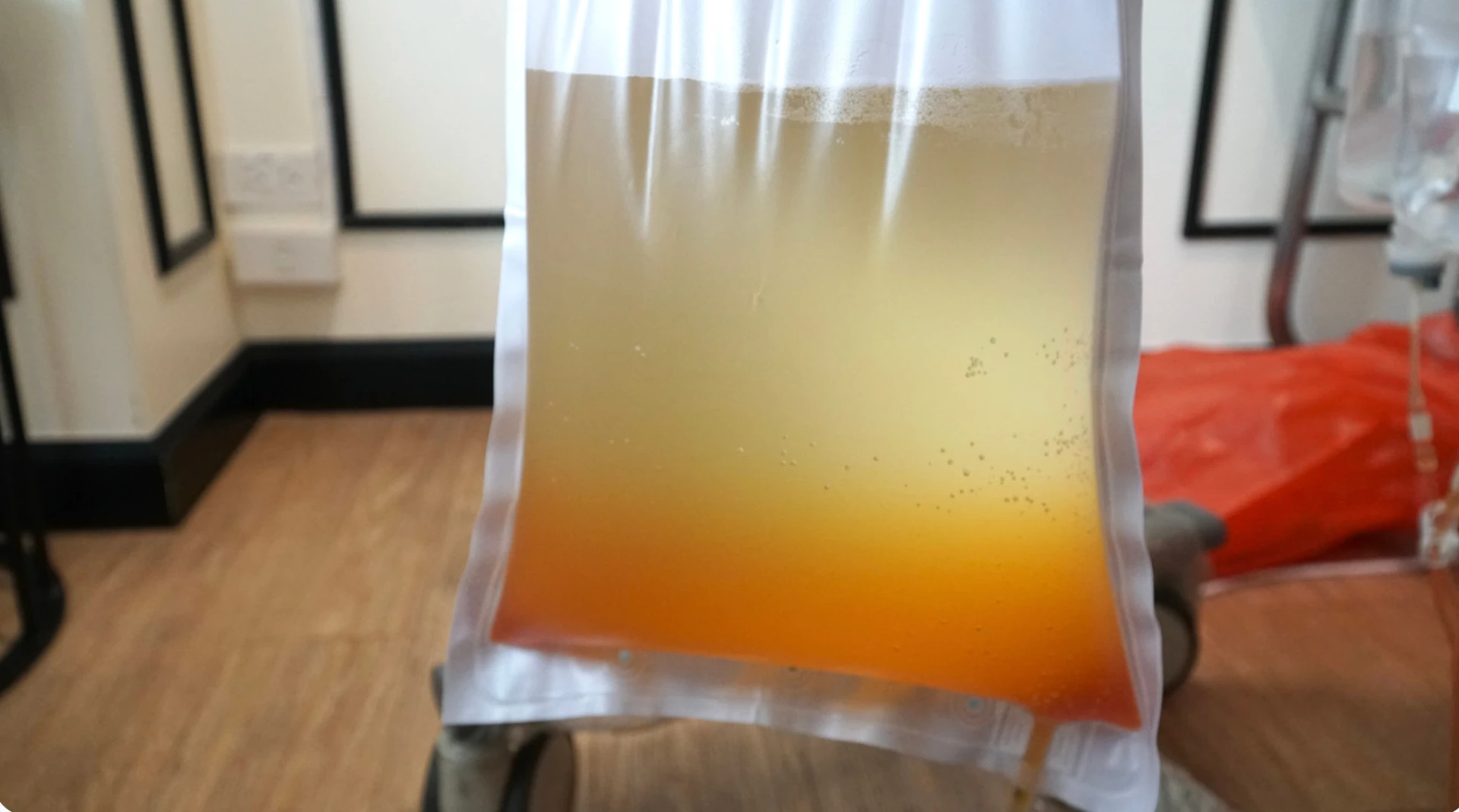
Discussion in the medical literature and in LINNA's own clinical material relates this selective stage to components such as excess LDL and lipid fractions, triglyceride-related components, abnormal antibodies, selected immune-related substances, and proteins associated with inflammation. Whether any of these are relevant to you is an individual medical question.
Conventional therapeutic plasma exchange (TPE) removes plasma more broadly and replaces it with a substitute fluid such as albumin or donor plasma. DFPP filters the plasma selectively and returns most of it. Neither approach is universally better; the appropriate choice depends entirely on the clinical situation and the treating physician's judgement.
How it works
01
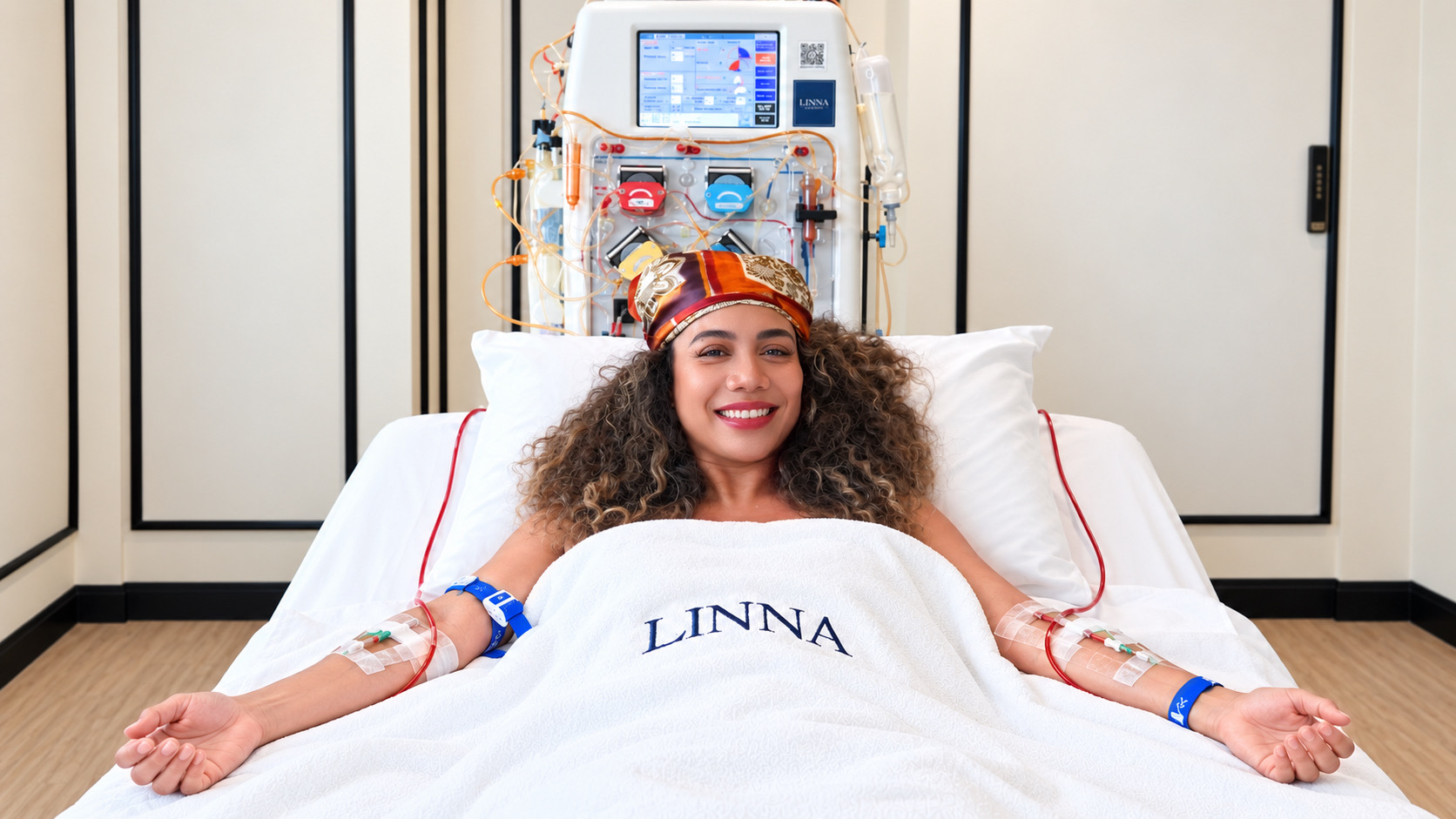
Venous access is established by the medical team, and the sterile single-use circuit is primed and checked before the session begins.
02
Blood travels through the first separator, where plasma is divided from red cells, white cells and platelets.
03
The separated plasma passes through the second filter, selected to reduce the plasma components identified during medical assessment.
04
Filtered plasma and the cellular components are returned through the circulation while the team monitors you throughout the procedure.
Why patients consider it
Patients with lipid findings on their laboratory results sometimes ask whether plasma filtration has a role alongside their existing medical care.
Some patients raise questions about antibody or immune-related plasma components identified during investigation.
Patients who have been told about inflammation-associated findings may want a physician's view on what is and is not appropriate.
Patients already under treatment elsewhere often come for a considered assessment before deciding anything.
DFPP is occasionally discussed as one element within a longer-term, physician-guided health plan.
Many consultations end with a clear explanation of why another approach, or no procedure at all, is the better option.
These are topics patients discuss during consultation. They are not promised outcomes, and individual suitability is always determined by a physician.
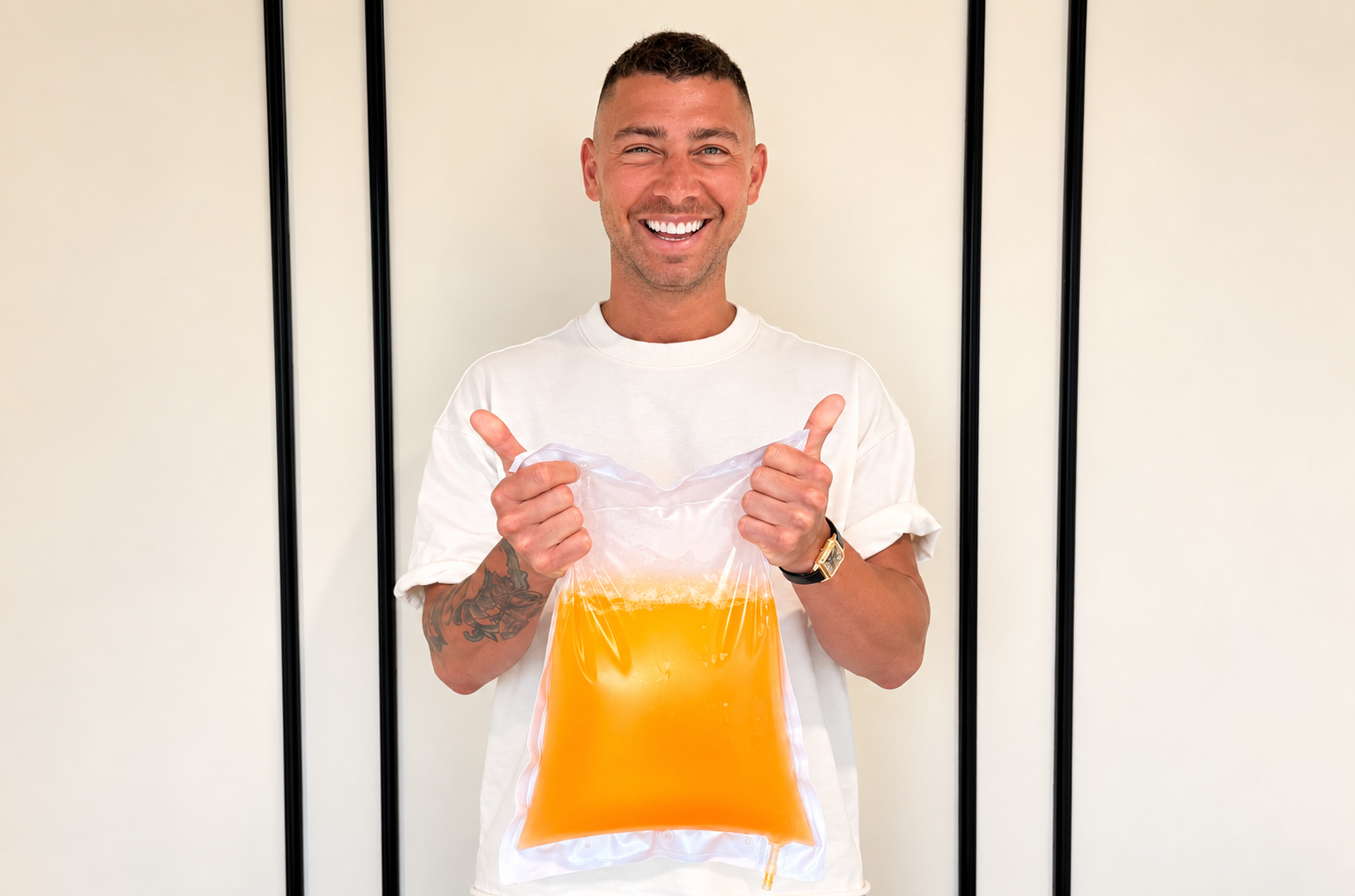
Medical assessment
Who may not be suitable
Certain conditions make DFPP inappropriate or require additional caution. Tell the medical team before assessment if any of the following apply to you.
What to expect
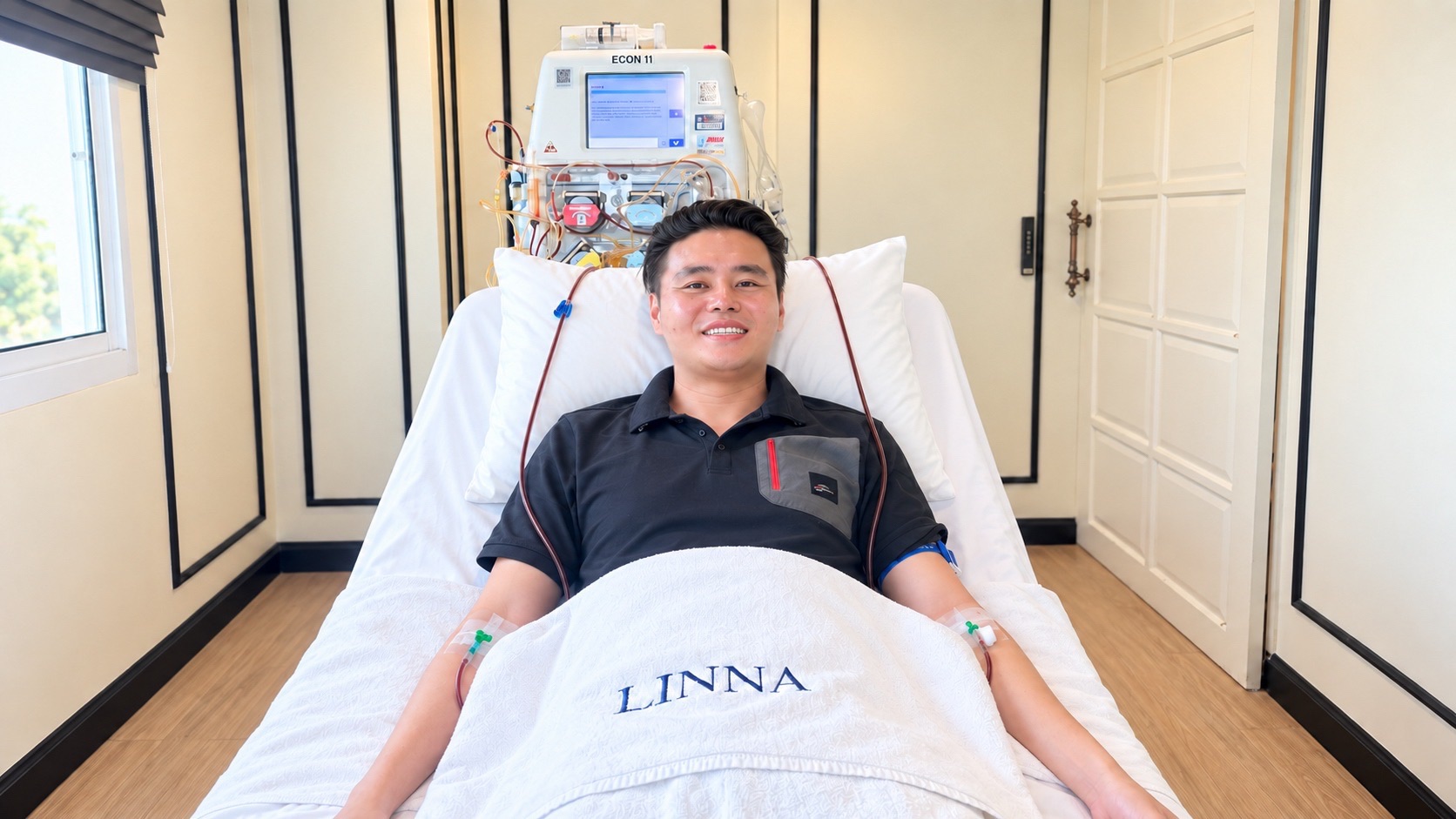
Setting
Private treatment suite, LINNA Clinic Bangkok
Supervision
Medical team present throughout the session
Circuit
Sterile, single-use disposable set
Planning
Parameters and filter selected individually
Consultation
Required before scheduling
Follow-Up
Arranged according to physician advice



Why LINNA Longevity
Every program starts with an individual medical review rather than a fixed package.
The team explains what the treatment does, what it does not do, and what remains uncertain.
Patients are supervised by the medical team during and after treatment.
Consultation and scheduling can be arranged before you travel to Bangkok.
Price
129,000 THB
Regular price 159,000 THB
One session, promotional price. Consultation, laboratory testing and individual suitability are assessed before any session is scheduled.
International Patients Welcome
English-Speaking Care Team
WhatsApp Support
Appointment Coordination Before Arrival
Bangkok Clinic
FAQ
It separates plasma from your blood cells and passes that plasma through a second selective filter before returning it. The filter is chosen to reduce particular plasma components identified during your medical assessment.
Therapeutic plasma exchange removes plasma broadly and replaces it with a substitute fluid. DFPP filters the plasma selectively and returns most of it. The right option depends on the clinical indication, and the physician will explain which applies to you.
No. It is not a general detoxification procedure. It is a selective filtration process used for defined clinical reasons.
Yes. Laboratory evaluation is part of the assessment, and results influence whether and how the procedure is planned.
That depends on the medication and your wider health status. Bring your list to the consultation and do not change prescribed medication without your treating doctor's guidance.
One session is 129,000 THB at the current promotional price, with a regular price of 159,000 THB. Laboratory testing and additional requirements are discussed during assessment.
Yes. Our English-speaking Care Team can coordinate the consultation and scheduling by WhatsApp before you travel.
Appointments · Bangkok
Book a consultation to review your health context, your questions and whether this program is appropriate for you.